


API or Application Programming Interface is a set of functions and procedures that allows systems to be integrated, making it possible for their functionalities to be reused by other applications or software.
An API allows two different applications to communicate with each other and exchange data. This avoids the need to recreate and redevelop an entire application to add its information. Applications connect to the API, collect the information and display it to the user on their device, in an easy and understandable language. They are essential in the world of web development as they help the user or consumer to see all the information without having to go directly to the source of the information.
APIs are visible to developers because they are part of the code of an application or website, but not to the end user or the general public.
Types of APIs
Here are the four types of APIs according to their intended scope of use:
- Public APIs, also called open or external APIs, can be used by any company or developer. Their purpose is to help the development of applications so that they can make use of other applications’ functions, creating a better user experience. Software developers can quickly implement components without any restrictions. The security measures for this type of API are relaxed. Some systems may be fully accessible, and others may require a simple registration or API key.
- Private APIs, or internal APIs, are published internally for the company’s developers to use to improve their own products and services and thereby improve communication within the organisation. Private APIs are not exposed to third parties. They have security measures to verify the identity of employees before they can access the system.
- Partner APIs can only be used by specific parties with whom a company agrees to share data. These APIs are used in business relationships, often to integrate software between partner companies. They use more security to provide access to data and ensure that only registered servers have permission to access that information.
- Composite APIs combine multiple APIs to address related or interdependent tasks. They often improve speed and performance, compared to individual APIs, and provide an all-in-one solution.
Another classification could be:
- Local APIs: allow applications to connect within a single system and computer.
- Web APIs: are designed to represent resources as HTML pages and are accessed via a simple hypertext transfer protocol or HTTP. Any web URL triggers a web API. Web APIs, also known as RESTful web service or REST API.
RESTful API or REST API is an interface used by two computer systems to exchange information securely over the Internet. REST APIs are used in applications that require a high number of round-trip messages, and in applications that for some reason stop responding by allowing REST to trigger the retry process. REST allows easy and fast calls via a URL. REST APIs use requests such as GET, PUT, POST, and DELETE, while SOAP APIs work with WSDL due to their XML format.
The importance of APIs today
APIs allow companies to integrate all systems, regardless of programming language or operating system, and deliver them in a secure way by applying the appropriate business and technology controls for each of them.
The use of APIs enables a shortening of time-to-market and companies can deliver the products customers demand more quickly. This means better outcomes, more satisfying customer experiences, the ability to create new revenue streams, integrate employees, partners, applications and devices to data anytime, anywhere, and so on.
APIs enable incredible time and resource savings by making it easier to use existing infrastructure, functions and software on new platforms without having to re-engineer them. For example, in the logistics sector, an API integration allows real-time connection of information related to inventory, orders, etc., making operations more efficient while providing quality customer service. They help automate administrative processes, simplify internal management, optimise time, reduce costs and reduce human error.
Finally, we cannot forget the importance of APIs in 5G technology. This is the fifth generation of wireless communications technology, which allows multiple devices to connect to the network. It is a continuation and improvement of 4G (or LTE) that favours, among other things, the speed of connection and data transmission.
5G networks, unlike previous hardware-based standards and their associated proprietary software, are virtual networks managed by software. Within this architecture it is important to differentiate the basic components in the architecture on which the configuration and deployment of the service is articulated:
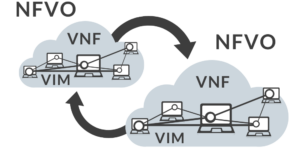
A series of components that ensure the integration of the functionalities of each service with the network infrastructure, called Virtual Infrastructure Manager and represented in the architecture with the acronym VIM. These are Software components.
A service management and coordination component, called Network Function Virtualization Orchestator and represented in the architecture by the acronym NFVO. It is a Software component.
A series of components that support the functionalities of each service offered, called Virtual Network Function and represented in the architecture by the acronym VNF. They are Software components.
The use of APIs appears as the key to the integration between these components, and it can be concluded that APIs are the heart of 5G.
Automated API testing with TAST
At SIPSA, our goal is to offer the customer our automation tool TAST and make their experience as satisfactory as possible. That’s why we have created the API/Webservice Adapter, to run Web Services tests and simplify the design of test cases, thanks to its REST mapping wizard.
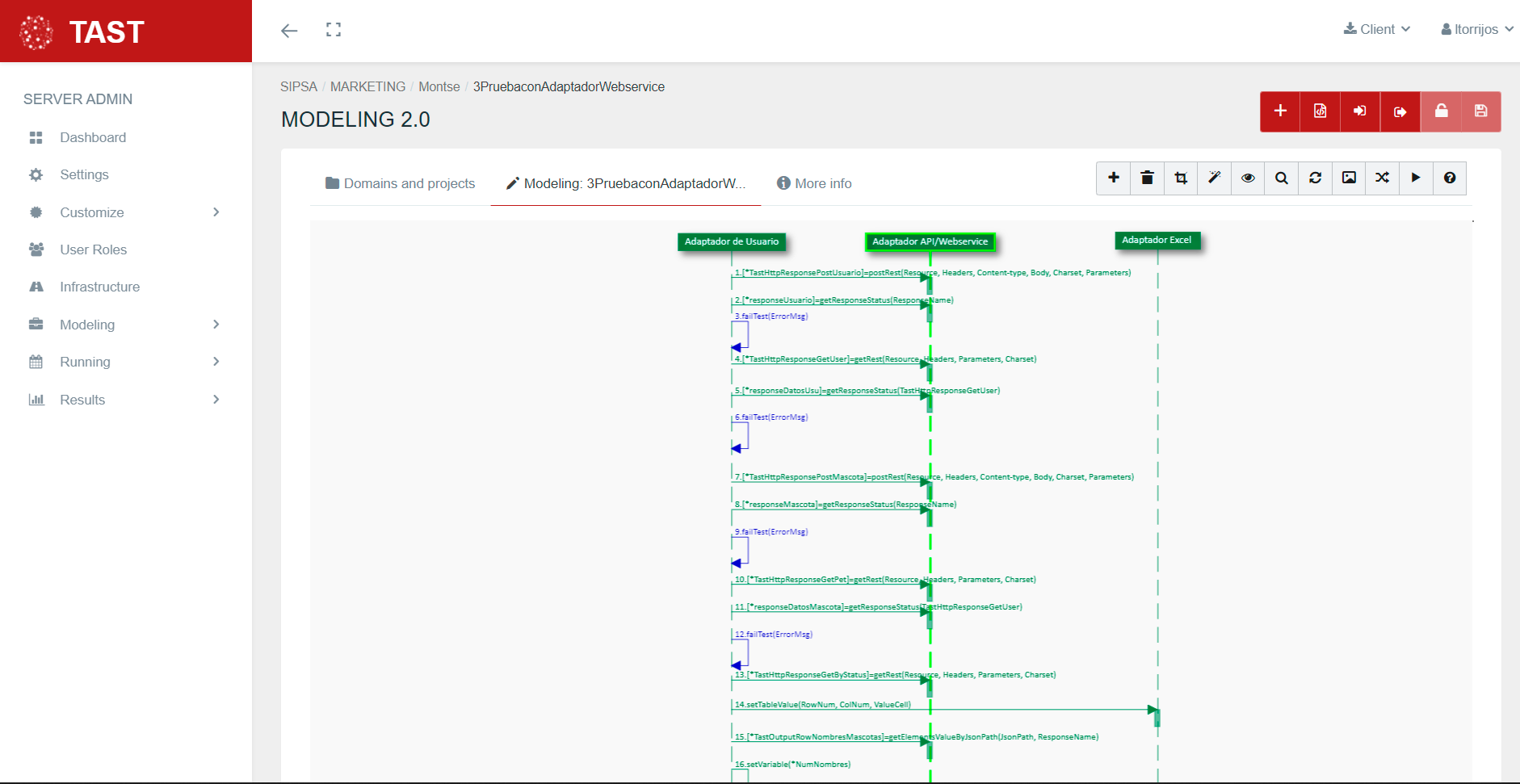
APIs are sometimes difficult to test, especially when they are not yet integrated into a container application. They are usually tested by manual testing through Postman or similar platforms. Using the TAST REST adapter, with TAST you can design test cases for unit testing APIs against sandboxes, ensuring the correct behaviour of the APIs. These test cases can then be used to test the APIs, for example against databases, allowing you to create complex test cases by simply nesting them using the TAST Gate functionality.
In the following links you can see some examples of how to automate API test cases with TAST, Test Automation System Tool.
Demo TAST API Testing (swagger)
Demo TAST API Testing (Trello)
For further information, please contact SIPSA here without any commitment.




Leave A Comment
You must be logged in to post a comment.